
Late last year, the Cabinet Committee on Security had cleared the proposal for the creation of the post.

With the Mumbai terror attacks exposing lack of coordination among security agencies, India today completely overhauled its coastal security apparatus and handed over the overall responsibility of maritime security to the Navy.
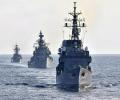
National Security Advisor Ajit Doval on Thursday called for seamless coordination among various agencies involved in protecting India's maritime interests in the face of emerging security challenges and increasing rivalries and competitions in the Indian Ocean.
With a view to creating a central command to focus on maritime security in the wake of Mumbai terror strikes, the Union Shipping Ministry is mulling the formation of a Bureau of Maritime Security, Union Shipping Minister T R Baalu said on Tuesday.The Ministry would make a proposal soon to the cabinet, which would decide on setting up of this central agency, he told reporters in Chennai on the sidelines of a seminar on maritime security.
Indian telecom gear maker Signaltron and semiconductor firm Signalchip have partnered with Indonesia's sovereign research body PRT BRIN to develop and deploy advanced telecom technologies, including 4G, 5G, and future 6G, specifically tailored for Indonesia's unique archipelagic geography to connect underserved regions.

Two commercial vessels, an oil tanker and a cargo ship, carrying a total of 22 Indian nationals, were hijacked by armed pirates in separate incidents off Yemen and Somalia. All Indian crew members on both vessels are reported to be safe, according to the latest information from the shipping ministry and the External Affairs Ministry.

Any military response to a cross-border terror attack from Pakistan will have to take into account the new alignments beginning to take shape in the region, points out former foreign secretary Shyam Saran.

The Pakistan Navy provided humanitarian assistance to the crew of an Indian offshore tug and supply vessel stranded in the Arabian Sea after receiving a request from Mumbai authorities.

Three Indian-flagged crude oil tankers, Desh Vaibhav, Desh Vibhor, and Sanmar Herald, successfully transited the Strait of Hormuz and are en route to India, even as Iran announced the closure of the critical waterway following Israeli strikes in Lebanon.

A Thai cargo vessel was struck by missiles near the Strait of Hormuz, leaving three crew members missing and prompting a rescue operation by the Royal Navy of Oman.

The Indian Coast Guard intercepted three vessels involved in an international oil smuggling syndicate operating in international waters near Mumbai, uncovering a sophisticated operation that evaded customs duties.
Pakistan has mooted to India the creation of a joint maritime security agency to prevent sea borne terrorist attacks like the one on Mumbai last year that killed 183 people.

The US rejected Iran's proposal to reopen the Strait of Hormuz, citing Tehran's demands for sanctions relief and access to frozen assets before nuclear program negotiations. US Ambassador Mike Waltz called the offer a "cynical attempt," while Iranian Foreign Minister Seyyed Abbas Araghchi disputed Waltz's account and reiterated Iran's readiness for both diplomacy and renewed hostilities. President Trump expressed confidence in winning the conflict soon and keeping all options, including military strikes, on the table, with denying Iran a nuclear weapon as the primary objective.

A TADA court in Jamnagar convicted 12 individuals in connection with the 1993 arms landing case, linked to Dawood Ibrahim, intended to avenge the Babri Masjid demolition. Ten of the convicted were sentenced to five years rigorous imprisonment.

The Directorate General of Shipping has advised Indian maritime agencies to restrict the deployment of seafarers to conflict areas following a US military strike that killed three Indian crew members off the Oman coast. India has also protested the attack, which occurred amidst heightened tensions in the Gulf region.

Tensions escalate between Iran and the US following an attack on an Iranian commercial vessel in the Sea of Oman, with both sides trading accusations over maritime security and ceasefire violations.

The United States Central Command announced strikes against Iranian military targets, including air defence and communication sites, in retaliation for alleged attacks on commercial shipping and US personnel. However, Iran's Foreign Ministry claims these strikes caused over 50 civilian casualties at a wedding and vowed a firm response. Iran's state media also reported retaliatory ballistic missile and drone attacks on US bases in Jordan and Bahrain, claims which were partially corroborated by Kuwait and Jordan reporting intercepted drones and missiles.

Iran's Islamic Revolutionary Guard Corps (IRGC) claims to have captured a US unmanned submersible near the Strait of Hormuz and launched ballistic missile strikes against a US airbase in Jordan and two US Navy destroyers. These actions are stated as retaliation for recent US attacks on Iranian oil tankers. The US Central Command (CENTCOM) had previously reported destroying Iranian crude oil carriers after IRGC missile attacks on US warships. The escalating tensions have led to regional air defence activations and warnings to tanker crews.

Much will depend on how the protagonists use the current interlude to work proactively for the beginning of a durable settlement or, on the contrary, prepare for a new round of escalation, points out Ambassador M K Bhadrakumar.

Supreme Leader Mojtaba Khamenei has reshuffled Iran's political and national-security establishment, appointing former SNSC Secretary Mohammad Bagher Zolghadr as his political adviser and veteran IRGC commander Mohsen Rezaei as his representative on the Supreme National Security Council, consolidating power amid the West Asia crisis and Strait of Hormuz tensions.

As many as 35 vessels, including cargo carriers and oil tankers, successfully navigated through the strategic maritime chokepoint of the Strait of Hormuz over the last 24 hours, according to Iran's state media reports citing a formal declaration by the Islamic Revolutionary Guard Corps (IRGC) Navy.
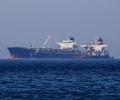
Iranian forces fired upon three commercial vessels in the Strait of Hormuz, with one possibly headed for Gujarat, raising concerns about maritime security in the strategic waterway.

Defence Minister Rajnath Singh praised the Indian Coast Guard's role during Operation Sindoor and highlighted its importance in national security on the occasion of its 50th Raising Day.

Prime Minister Narendra Modi has highlighted the risks posed by the 'weaponisation' of resources and strategic sea routes, urging India to achieve greater self-reliance in energy to mitigate vulnerabilities to overseas supplies and geopolitical tensions.

The Indian Navy successfully recovered and safely disposed of an unexploded missile warhead from the MT Olympic Life crude oil tanker, which had reported an explosion off the coast of Oman and was en route to Kochi. The operation showcased the Navy's expertise in explosive ordnance disposal and its commitment to maritime safety in the Indian Ocean Region.

India has expressed strong concerns over attacks on commercial ships in the Strait of Hormuz, citing its importance to India's energy and economic security. Ambassador Yojna Patel highlighted the need to respect international law and ensure the safety of seafarers, while also addressing broader Middle East issues including the situation in Gaza and Lebanon.

US President Donald Trump on Thursday said that he has directed the country's Navy to take decisive action against any vessels attempting to lay mines in the strategically vital Strait of Hormuz amid escalating tension over the virtual control of the waterway between Tehran and Washington.

US President Donald Trump expressed confidence in America's position amid US-Iran peace talks in Islamabad, stating that Washington stands to 'win' regardless of a deal.

'We are getting used to the constant alerts to take shelter, listening to sonic booms from jets flying above us, hearing news of neighbouring ports being targeted, and being the only ship in the terminal.'

The Ministry of External Affairs (MEA) has stated that India is closely monitoring developments in West Asia, addressing topics ranging from ceasefire efforts to maritime security and the safe return of Indian nationals. The MEA also addressed the UN Climate Change Conference and the delimitation bill.

Iranian Foreign Minister Seyed Abbas Araghchi mocked US President Donald Trump's claim of the US being the 'guardian' of the Strait of Hormuz, asserting that Iran has always been and will remain the sole guardian, while also suggesting that any entity providing security should be compensated, though Trump's proposed '20 per cent' levy is 'too much'.

Kuwait's air defence systems engaged 'hostile aerial targets', Jordan intercepted four missiles, and Bahrain sounded warning sirens after Iran launched retaliatory strikes targeting US military installations in the region.

An Indian national was killed in an attack on an oil tanker off the coast of Oman. The tanker was struck by an explosive-laden unmanned boat, resulting in a fire and explosion.
A Palau-flagged oil tanker with 15 Indian crew members was attacked off the coast of Oman, resulting in injuries. The incident occurred amidst rising tensions in the Middle East following attacks between Iran, the US, and Israel.

Notwithstanding the economic complementarities and the host of agreements for deepening economic relation on a host of areas, both sides share common viewpoints on the foreign policy domain and seek common grounds to serve as a counterweight to China, notes Dr Rajaram Panda.

The United States and Iran have reached an agreement in principle to immediately and permanently halt all military operations, lift sanctions, and work towards a comprehensive final agreement within 60 days, including a significant reconstruction package for Iran.
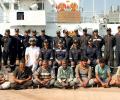
The Indian Coast Guard rescued seven Indian fishermen who were apprehended by the Pakistan Maritime Security Agency (PMSA) in the mid-sea off the Gujarat coast. The incident took place on Sunday when the Coast Guard received a distress signal from an Indian fishing boat operating near the No-Fishing Zone (NFZ). The Coast Guard ship intercepted the PMSA vessel and persuaded personnel on board to release the seven Indian fishermen. The Indian fishing boat, Kal Bhairav, was reportedly damaged and sunk during the incident.

British armed forces, including Royal Marine Commandos, intercepted the Russian shadow fleet oil tanker SMYRTOS in the English Channel, marking the UK's first such operation. The action aims to disrupt Russia's funding for its war in Ukraine, with the UK government highlighting the shadow fleet's role in sustaining Moscow's military efforts.

A total of nine crew members were found on board the Pakistani boat.

The plan includes three such formations: A China-focused Northern Theatre Command, a Pakistan-focused Western Theatre Command, and a Maritime Theatre Command.
